





This application case study explores a common yet critical challenge in manufacturing: how to optimize a stamped part for high-volume assembly. We will detail a typical scenario where a seemingly "good" part causes significant problems on an automated assembly line, and how a smart stamped part redesign can lead to a highly effective solution. This is a story about thinking beyond the part itself to optimize the entire production system.
The Problem: A "Good" Part That Failed in a "Great" System
In many projects, a client approaches a manufacturer with a part design that, on paper, meets all dimensional specifications. However, when this part is introduced into a high-speed, automated production environment, hidden problems can emerge.
The Symptom: High Jam Rates on the Automated Assembly Line
A typical problem we encounter is a client experiencing high jam rates on their automated assembly line. Robotic arms or feeding mechanisms struggle to pick up or insert the stamped part, causing frequent stops. This assembly line downtime can be incredibly costly, negating any savings from a low per-part price.
The Root Cause: Minor Inconsistencies and a Non-Optimized Design
Upon analysis, the root cause is often twofold. First, minor, within-tolerance variations from part to part can accumulate and cause issues for sensitive machinery. Second, the part design itself was not created with automation in mind; it may lack features that help guide it into place.
The Solution: A DFM-Driven Redesign Approach
Our solution is to apply Design for Manufacturability (DFM) principles, with a specific focus on assembly. This is often called Design for Assembly (DFA).
Step 1: Analyzing the Assembly Process
Our first step is always to understand the client's assembly process. We ask questions like: How is the part picked up by the robot? What direction is it inserted from? What are the mating components? This system-level view is crucial.
Step 2: Adding Lead-in Features (Chamfers) for Easy Insertion
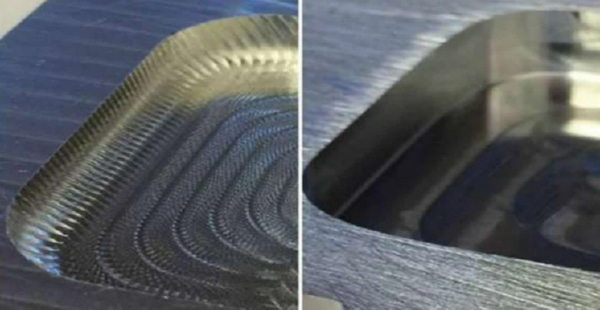
One of the most effective redesigns is adding small, angled surfaces called chamfers or rounded edges called lead-in features. These features act like a funnel, helping to guide the part into its mating hole or slot, even if it's slightly misaligned.
Step 3: Improving Tolerances on Critical Locating Features
While we advocate for relaxing non-critical tolerances, we often recommend tightening the tolerances on the specific features the assembly robot uses for location and orientation. This ensures the part is always presented to the machinery in a consistent and predictable way.
Step 4: Enhancing Part-to-Part Consistency with a Progressive Die
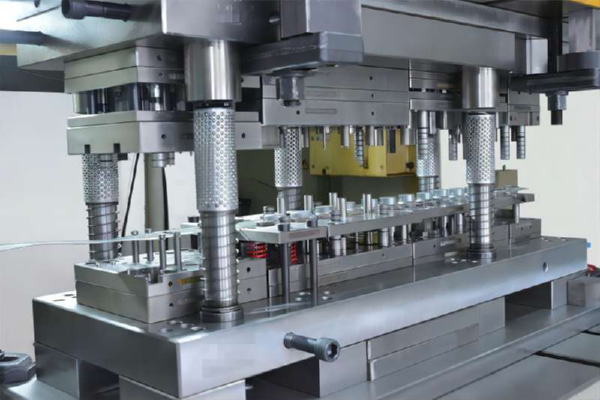
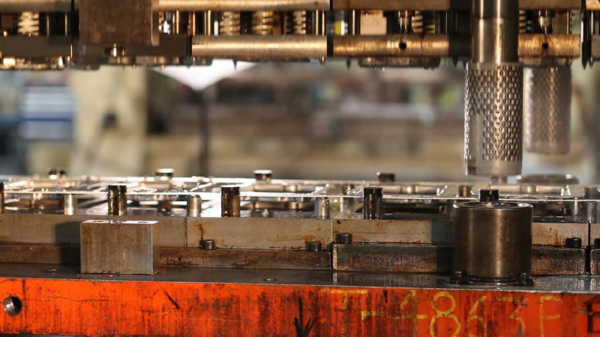
To reduce minor variations, we often recommend manufacturing the part on a progressive die. This automated process produces extremely consistent parts, which is a key requirement for seamless performance in high-volume assembly.
The Results: A Part Designed for Seamless Automation
By implementing these targeted redesigns, a problematic part can be transformed into a component that works in perfect harmony with the client's automated system.
Drastically Reduced Assembly Line Downtime
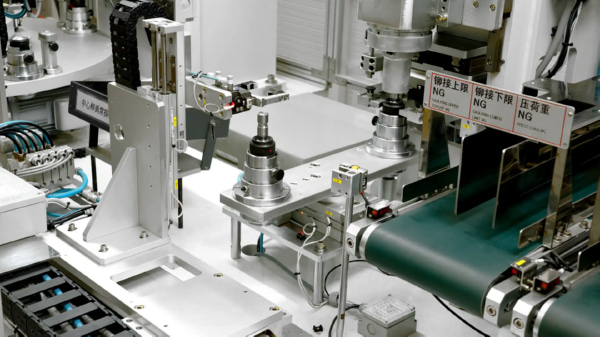
The most immediate result is a dramatic reduction in jam rates and assembly line downtime. The optimized part flows through the system smoothly, increasing overall throughput and productivity.
Improved Overall Product Quality and Reliability
A part that assembles correctly every time leads to a more reliable final product. The risk of parts being forced, misaligned, or damaged during assembly is eliminated, improving the overall product quality.
Lower Total Cost Through Increased Throughput
While a stamped part redesign and a new tool may require an upfront investment, the savings from increased assembly line efficiency and reduced scrap often lead to a much lower total cost.
An Engineer's Perspective: A Quote from Our Team
This approach reflects our core engineering philosophy.
"Our goal is to think beyond the part itself and consider how it will perform in the client's total production system." - Lead Engineer, Pengce Metal
We believe our responsibility doesn't end when a part leaves our factory. We see ourselves as partners in our clients' success, and that means designing components that are optimized for their entire value chain.
A Smart Prototyping Strategy for a Successful Launch
This application case study illustrates how a collaborative, engineering-led approach can solve costly production challenges. A part is only truly "good" if it performs perfectly within the system it was designed for. By focusing on DFM and Design for Assembly, we help our clients achieve true efficiency. What is the most common design flaw you see that hinders automated assembly?
Your Metal Prototyping and Sampling Questions Answered
What is DFM for Assembly (DFA)?Design for Assembly (DFA) is a specific subset of DFM. It is a process of designing a product for ease of assembly. For stamped parts, this often means adding features that make automated handling and insertion easier and more reliable.
How can adding a chamfer or lead-in help with automation?How do lead-in features help? Robotic assembly systems are fast, but they may have slight positioning variations. A chamfer or rounded edge acts as a guide, correcting for minor misalignments and funneling the part into its correct position smoothly, rather than jamming.
What is the most common design flaw you see that hinders automated assembly?The most common flaw is the lack of lead-in features on parts that need to be inserted into a hole or slot. Another common issue is placing locating holes too close to bends, which can cause them to become slightly distorted and hard for automation to use accurately.
How can I get my part reviewed for assembly optimization?How can I get my part reviewed? We offer this as part of our free Design for Manufacturability review service. Simply submit your part design along with a brief description of your assembly process, and our engineers will provide feedback and suggestions for optimization. Submit your design for a free review today.