





In modern manufacturing, efficiency is paramount. For high-volume metal part production, automated stamping is the answer. But "automation" comes in two primary forms: progressive die stamping and transfer die stamping. While both are powerful stamping methods, they operate on different principles and are suited for different applications. This guide will compare these two advanced technologies to help you in choosing the right automated stamping method for your project.
Understanding Progressive Die Stamping: The All-in-One Solution
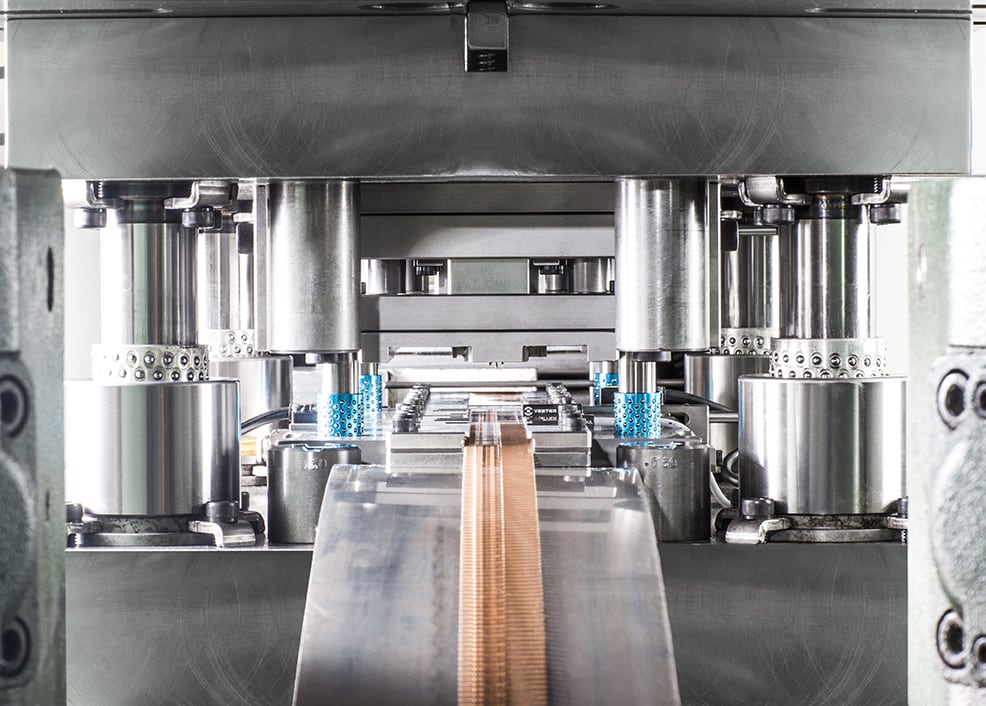
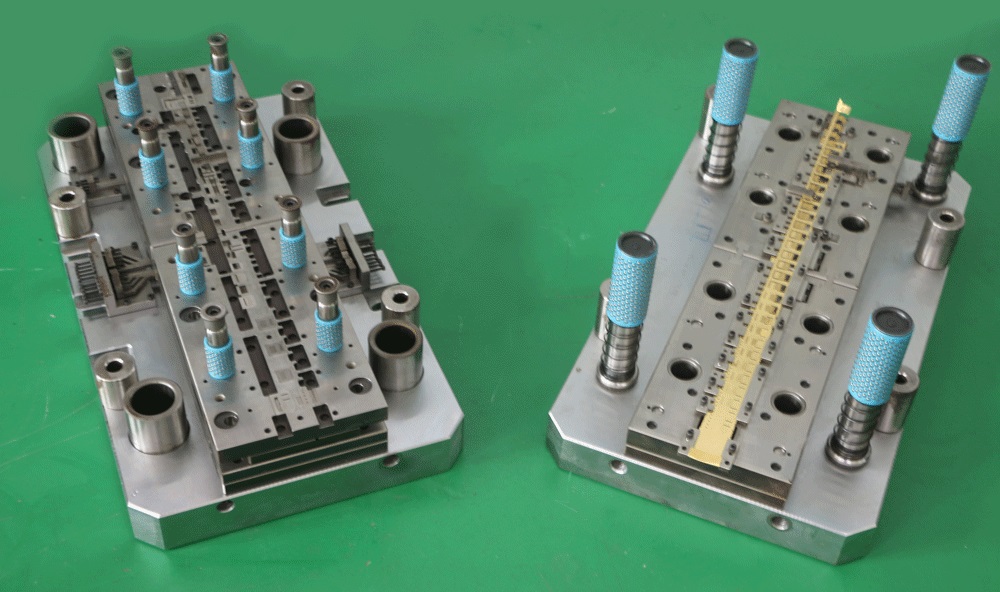
What is progressive die stamping? Think of it as a complete factory compressed into a single, complex tool. A progressive die performs multiple cutting and forming operations simultaneously on a continuous strip of metal.
How It Works: The Continuous Strip of Metal
In progressive die stamping, a coil of sheet metal is fed through the press. As the die closes, a series of stations within the tool work on the metal strip in sequence—piercing, bending, coining, and more. The part remains attached to the strip until the final station, where it is cut off as a completed component.
Key Advantages: High Speed, Low Labor Cost, and Consistency
The primary advantage is incredible high speed. A progressive die press can run at hundreds of strokes per minute, making it ideal for massive production runs. Because it's a continuous, all-in-one process, it requires minimal manual intervention, resulting in low labor cost and exceptional part-to-part consistency.
Limitations: Higher Tooling Cost and Material Waste
The main drawback is the high initial tooling cost. These dies are extremely complex and expensive to build. Additionally, the strip of metal that carries the part through the die becomes scrap, which can lead to higher material waste compared to other methods.
Understanding Transfer Die Stamping: The Independent Mover
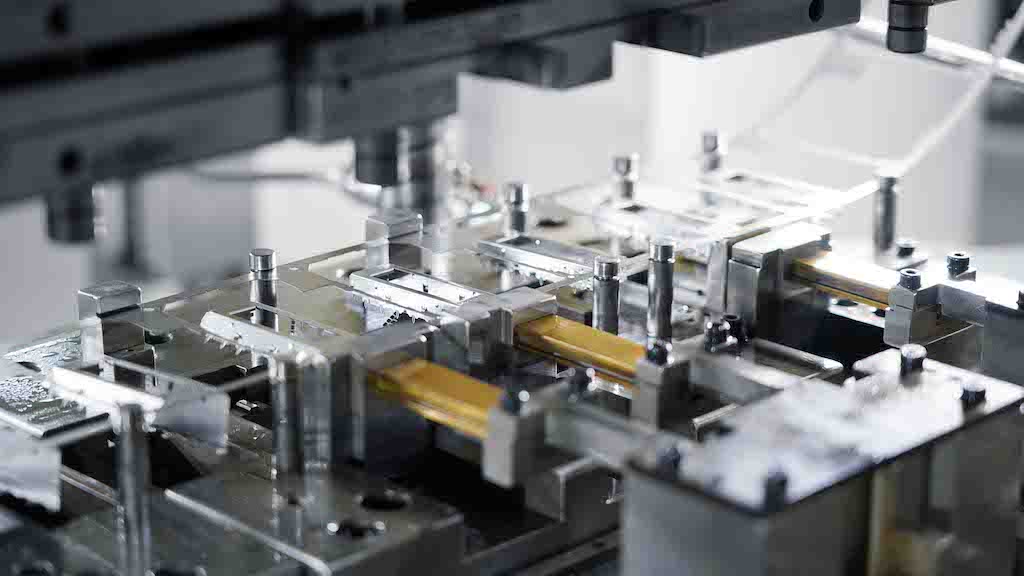
What is transfer die stamping? If a progressive die is an all-in-one factory, a transfer die is like a series of specialized workstations connected by robotic arms. The part is handled individually between operations.
How It Works: Separating the Part Early
In transfer die stamping, the part is typically cut from the metal strip (blanked) at the very first station. It becomes a free, independent piece. Then, a mechanical transfer system, often called a "transfer finger" or "gripper," physically moves the part from one die station to the next for subsequent operations.
Key Advantages: Handling Large or Deep-Drawn Parts, Tooling Flexibility
The biggest advantage is the ability to handle larger parts and deep-drawn parts. Because the part is free from the strip, it can be lifted, rotated, and positioned freely, allowing for more complex forming operations. It also offers greater tooling flexibility, as individual die stations can be adjusted or modified more easily.
Limitations: Slower Speed and More Complex Machinery
The trade-off for this flexibility is speed. The mechanical part transfer process is inherently slower than the continuous feed of a progressive die. The machinery is also more complex, requiring sophisticated transfer mechanisms synchronized with the press.
Head-to-Head Comparison: Key Differences at a Glance
How do I choose the right stamping method? Let's put them side-by-side to see the key distinctions.
| Feature | Progressive Die Stamping | Transfer Die Stamping |
|---|---|---|
| Speed & Output | Very High | Moderate to High |
| Tooling Cost | Very High | High (but can be more modular) |
| Part Size | Small to Medium | Medium to Very Large |
| Geometry | Ideal for flatter parts | Ideal for deep-drawn, complex parts |
| Material Waste | Higher | Lower |
Speed and Output Rate
For pure output, progressive die stamping is the undisputed champion of high speed stamping methods. It is significantly faster than transfer die stamping.
Tooling Cost and Complexity
Progressive dies are generally more complex and have a higher upfront tooling cost. Transfer dies, while still expensive, can sometimes be more modular, potentially offering some cost savings if only one station needs modification.
Part Size and Geometry Constraints (Ideal for complex stamped parts?)
Progressive dies are limited by the width of the material strip. Transfer dies can handle much larger parts. They are the preferred method for manufacturing deep-drawn parts like automotive oil pans or kitchen sinks.
Material Utilization Efficiency
Transfer die stamping typically results in less material waste. Because the part is blanked out efficiently at the start, there is no carrier strip that needs to be scrapped, saving material costs on large runs. For help analyzing your part, contact the experts at Pengce Metal.
How to Choose the Right Stamping Method for Your Project
Your choice depends entirely on the characteristics of your part and your production goals.
Choose Progressive Die Stamping for: Small to Medium, High-Volume Parts
If your part is relatively small to medium-sized, doesn't require extreme deep drawing, and you need millions of them at the lowest possible per-piece price, progressive die stamping is your best bet.
Choose Transfer Die Stamping for: Large, Deep-Drawn, or Asymmetrical Parts
If you are manufacturing large complex stamped parts, components that require significant drawing operations, or parts that need to be manipulated between stations, transfer die stamping is the superior technology.
The Right Automation Strategy for Optimal Manufacturing
In the world of automated stamping, there is no one-size-fits-all answer. Both progressive and transfer dies are powerful tools for complex stamped parts manufacturing. Choosing the right strategy requires a deep understanding of your part's geometry and your business goals. Partnering with a manufacturer who is an expert in these advanced stamping methods is the key to achieving optimal efficiency and cost. Which of these automated stamping methods seems more suitable for the types of parts you design? Let us know why in the comments!
Your Questions on Advanced Stamping Methods Answered
Is a progressive die more expensive than a transfer die?Generally, a progressive die for a complex part is more expensive to build than the combined cost of the individual station dies in a transfer system. The complexity of integrating all operations into a single tool drives up the cost.
Can you convert a part from a series of single-hit dies to a progressive die?Yes, this is a common strategy for scaling up production. If a product becomes successful and volumes increase, investing in a progressive die can dramatically reduce the per-part cost compared to running it through multiple separate operations.
What is a "turret press" and how does it compare?A turret press is a type of CNC punching machine, not a stamping press in the same category. It holds a "turret" of standard punches and dies and is programmed to punch various holes and shapes. It's excellent for prototyping and low-volume sheet metal work but cannot perform forming and is much slower than die stamping.
How does Pengce Metal help me decide which process to use?Our engineering team will analyze your part design, material, and expected production volume. Based on this comprehensive review, we will recommend the most cost-effective and efficient manufacturing method, whether it's single-hit, progressive, or another process, to meet your specific needs. Submit your design for a free analysis.