





Before you press the "go" button on mass production, you need 100% confidence that your manufacturing partner can consistently produce your part to your exact specifications. This final, critical checkpoint is known as the First Article Inspection (FAI). It is the most important step in the tooling approval process. This guide will walk you through the entire FAI process, explaining what it is, why it's so important, and your crucial role in the sample approval stage.
What is First Article Inspection (FAI) and Why Is It So Critical?
What is First Article Inspection? The FAI is a formal method of design verification where the first parts produced from a new tool are rigorously measured and inspected.
The Goal: Verifying the Manufacturing Process, Not Just the Part
The primary goal of an FAI is not just to inspect a few sample parts. It is to verify that the entire manufacturing process—the tooling, the machinery, the parameters—is capable of reliably producing parts that meet all engineering specifications.
Your Final Green Light Before Mass Production
Think of the FAI as your final green light. A successful FAI provides the documented evidence and physical proof needed to confidently authorize the start of mass production. It is the bridge between the tooling investment and your final product launch.
The FAI Process: A Step-by-Step Walkthrough
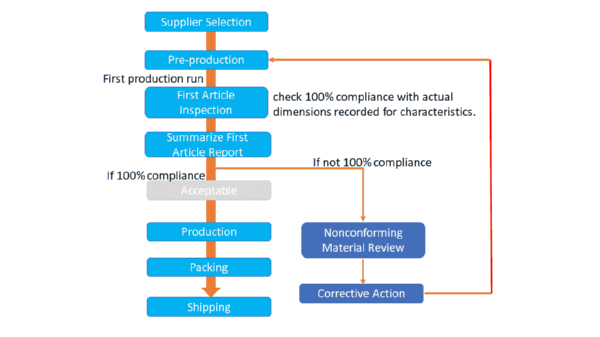
Our FAI process is a structured, transparent journey designed to ensure complete alignment before we move forward.
Step 1: Producing the First Samples from the New Tool
Once your new tool is complete, we set it up on our production press. Using the specified production material, we run a small batch to produce the first official samples.
Step 2: Our Internal Comprehensive Inspection
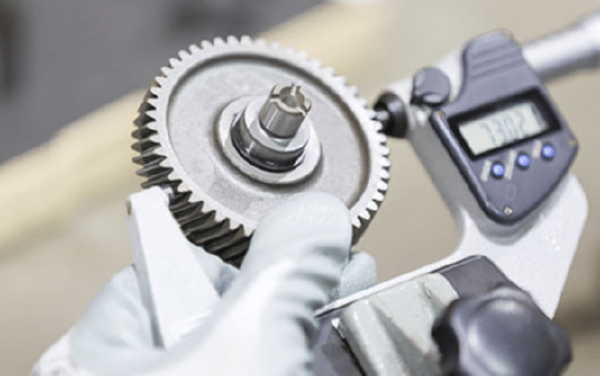
Our quality team takes these first samples and performs a comprehensive inspection. This includes a full dimensional inspection, where every dimension, tolerance, and feature on your drawing is measured and recorded.
Step 3: Creating the First Article Inspection Report (FAIR)
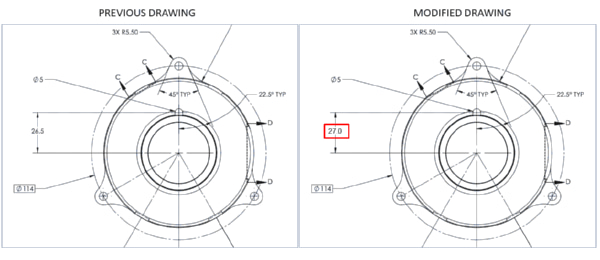
The results of this inspection are compiled into a formal document called the First Article Inspection Report (FAIR). This report directly compares the actual measured values of the sample parts to the requirements on your drawing.
Step 4: Submission of Samples and Report for Your Approval
We then submit the physical samples and the detailed FAIR to you. This package gives you everything you need to make your final sample approval decision.
What to Check: Your Role in the Sample Approval Process
Your involvement in the FAI process is crucial. When you receive the samples, we recommend a three-part evaluation.
Perform a Thorough Visual Inspection
First, conduct a careful visual inspection. Check the overall appearance, the surface finish, and look for any cosmetic imperfections. Does the part look and feel the way you envisioned?
Verify Critical Dimensions and Tolerances
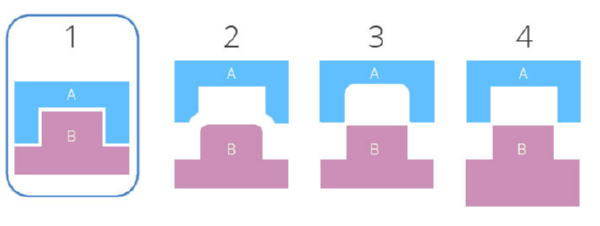
Review the provided FAIR and, if you have the equipment, verify a few of the most critical-to-function dimensions yourself. This confirms that the measurements are accurate and the parts are within tolerance.
Test the Part in Your Own Assembly (Fit and Function)
This is the most important test. Take the sample parts and test them in your actual product assembly. Do they fit correctly with mating parts? Do they perform their intended function? This fit and function test is the ultimate validation. For guidance on our partnership process, you can read our new client guide.
Understanding the Outcomes of a FAI
Based on your evaluation, there are three possible outcomes for the tooling approval.
Full Approval: The Path to Production
If the samples meet all requirements, you provide full, written approval. This gives us the green light to schedule your first production run.
Conditional Approval: Minor Adjustments Needed
Sometimes, a minor adjustment to the tool is required. You can provide a conditional approval, authorizing us to make the specific change and proceed to production without needing a second FAI.
Rejection: Addressing Significant Issues
If a significant issue is found, you will reject the samples. We will then work with you to understand the root cause, perform the necessary modifications to the tool, and submit a new set of FAI samples for your approval.
A Collaborative Step Towards a Successful Product Launch
The First Article Inspection (FAI) is a critical, collaborative milestone. It ensures that both our team and your team are in complete agreement that the manufacturing process is ready to produce perfect parts. By working together through this structured sample approval process, we can move forward into mass production with total confidence. From your experience, what is the most important thing to check on a first article sample?
Your Questions on FAI and Tooling Approval Answered
What is the difference between FAI and PPAP?An FAI is focused on verifying the part against the design drawing. The Production Part Approval Process (PPAP) is a more comprehensive framework, common in the automotive industry, that includes the FAI report but also requires documentation on the entire manufacturing process, material certifications, process capability studies, and more.
How long does the FAI process typically take?After the tooling is complete, the process of producing samples, performing our internal inspection, and creating the report typically takes 5-7 business days before the package is shipped to you.
What happens if we request a change after approving the FAI samples?Any design changes requested after sample approval will require a formal engineering change order. This may necessitate modifications to the tool, which would require a new FAI process and could incur additional costs.
Is there a cost for the FAI samples?The FAI process and the initial set of samples are considered part of the overall tooling approval and investment. The cost is built into the one-time tooling price that we quote at the beginning of the project. To start that process, contact us today.